CO31: AI energy demand dominates Antalya’s electrification goals
While the COP31 presidency has set out ambitious targets to advance electrification, discussions on the ground are centered on the impact of artificial intelligence on global climate ambitions
The COP31 presidency's 35-by-35 goal has become the talk of the town in Antalya. But conversations over electrifying 35% of final energy consumption by 2035 have also sparked debates – with artificial intelligence (AI) being the most contentious.
Longview Networks Insurance Investment Forum | 20th January 2027 | London
Panel themes reflected the trend. One hosted by the IEA asked if AI was an energy challenge or opportunity. The Russian pavilion convened experts to ask what AI brings to the climate solutions discussion. The Italians gathered data centre industry insiders to talk emissions accounting. The Nordics reckoned they could point to the world's most attractive destination for sustainable data centre investment.
At COP31, the energy intensity of artificial intelligence and data centres was proving hard to ignore.
Hard to ignore
Investors are watching as Antalya's electrification agenda closely. Not only is the rollout of electrification a capital-intensive exercise, but it also brings the supply of that electricity and AI's energy appetite into sharp focus.
"AI will be hard to ignore at COP31 because it is both part of the electricity-demand challenge and potentially part of the solution", predicted Stephanie Maier, global head of sustainable at FTSE Russell.
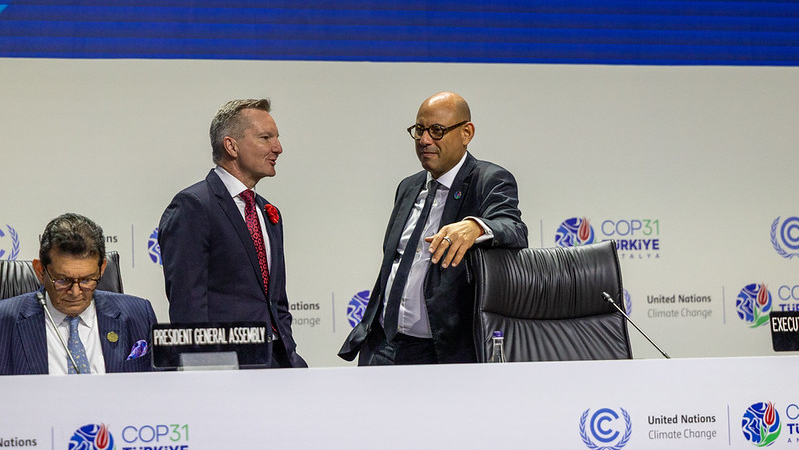
Leaders who addressed COP31 concurred. "The rise of AI, which with all its benefits and potential, also gives rise to legitimate fears and questions", warned Australia's energy minister and COP31 president of negotiations, Chris Bowen.
Investors, for their part, were tracking how politicians and industry players planned to address the AI energy challenge. "For investors, the question is not simply how much electricity AI consumes, but where that power comes from and whether rising demand accelerates investment in clean generation, grids, storage and efficiency", Maier added.
Gerben Hieminga, senior energy sector economist at ING, said timing was playing a role in making AI the centre of Antalya's attention. "AI and data centers are becoming significant sources of incremental electricity demand at exactly the moment when grids in many regions are already constrained", he said.
America's blue wave
COP31 also came on the heels of a Democratic wave in US midterm elections. Hieminga reckoned political scrutiny of data centre power demand was likely to rise in the US – particularly where energy affordability came into question.
Given American AI technology dominance, that could flow into other jurisdictions.
"With the US being absent at COP31, I still believe that developments in the US will be closely watched and discussed behind the scenes. Also because it is leading in AI and data centers. I therefore expect the COP31 debate around AI to go beyond its carbon footprint, with US trends being discussed as what might be next for other countries", explained Hieminga.
Halfway through the summit, consensus on AI's energy challenge was unsurprisingly sparse. Yet, at COP31, it was getting its fair share of attention and scrutiny. As days went by in Antalya, concerns over whether AI was a headwind or tailwind for the energy transition were proving too hard to ignore.