

Solid returns: how Nest is branching out into timber
UK master trust Nest has recently confirmed its first allocation to timber. Net Zero Investor sat down with Jessica Menelon, private markets manager at Nest to find out more
Nest, the largest UK master trust with approximately £42bn in assets under management, was one of the first defined contribution (DC) providers in the UK to venture into private markets. Historically, this has been challenging for DC master trusts, which are required to provide daily pricing for their invested assets and adhere to a charge cap.
Since announcing its first private credit mandate in 2019, Nest has expanded into private equity and infrastructure, and last month, it announced its first investment in natural capital by investing in timberland.
Having joined Nest in 2019, Jessica Menelon has been part of the private credit and private equity procurement processes and took an active role in Nest’s recent timberland tender. Although the decision to invest in natural capital was made as early as 2019, it took five more years for the investment to be confirmed.
Stable returns
Why did the fund consider timber? Stability and its lack of correlation with other asset classes were the main appeals, says Menelon. “We also find the carbon sequestration element very interesting as we are on our own net zero journey,” she adds.
Timber’s risk-return profile is somewhat unusual for a private market asset. While asset classes such as private equity and credit have historically delivered double-digit returns, timber investors must lower their expectations but can, in exchange, enjoy a steady income stream. Nest has factored this in an internal rate of return (IRR) of around 8%, with the US timber offering slightly lower returns and Latin American timber higher returns, Menelon explains.
“There are two elements to timber. First, you are investing in the land, and the value of the land appreciates, especially if you maintain it properly, which is something we are very focused on. Then we also receive yields from the sale of the timber. The amazing thing about timber, in contrast to agriculture, is that if there is lower demand for timber, we can just leave the trees to grow, so you are not losing any value. You can cut them whenever demand increases again, which is very different from most crops. That is why timber returns are very stable.”
A crucial aspect of this is the management of biodiversity within the forests. “To have a productive forest that is healthy, biodiversity needs to be a main focus for fund managers. Trees won’t be healthy if you are not maintaining biodiversity.”
Nest also selected a manager focused on shorter distribution contracts, allowing timber producers to renegotiate prices in line with inflation, she adds.
Scaling up
A key challenge for Nest is the unusually strong inflow of assets it faces every month. Since the introduction of automatic enrolment, a process which automatically deducts a portion of DC members' salaries for their retirement savings, the fund sees more than £500m of inflows every month. This creates a challenge when scaling up assets to meet strategic asset allocation targets, particularly for a relatively illiquid asset like timber.
So far, Nest has made a £550m commitment to Campbell Global to be deployed over three years, but it ultimately aims to allocate 2% of its total assets under management (AUM) to the asset class. Given that the master trusts expects to hit £100bn in AUM by the end of the decade, this would amount to a £2bn allocation to timber.
“The fund, like all of Nest’s private market strategies, is open-ended, so we don’t have to dispose of any properties we really like,” explains Menelon. Campbell Global was also selected deliberately from among 12 other managers due to its relatively larger size. “Campbell Global is one of the larger timber fund managers, and we have seen a strong pipeline from them so far, so we are quite confident that we will be able to deploy capital consistently. Of course, we are not allocating as much to timber as we have to private capital and equity,” she acknowledges.
Other obstacles for DC investors seeking exposure to relatively illiquid assets such as timber are the restriction on daily pricing and costs. Nest is approaching the pricing challenge by pricing all member funds daily, but not the underlying funds, Menelon explains.
The question of costs is a more sensitive one. While Nest is not able to disclose the details of the pricing arrangements with Campbell Global, Menelon says the master trust has kept a close eye on fees. “As with all our private market investments, we’re not paying any carry.”
Portfolio breakdown: playing it safe
When it comes to the breakdown of the portfolio, the fund is playing it safe by focusing its allocations on producing timber properties predominantly located in the largest commercial timber markets, such as the US, Australia, New Zealand, and South America, with some exposure to Europe. The fund does not have exposure to Asia or Africa.
As part of the due diligence process, the team has visited some of the timber developments in the Southern US and the West Coast. “We got to see how trees are cut down and the process of using every single bit of the tree, which was really interesting,” she shares.
Default option
The timber allocation is now available to all Nest members who are part of the default growth fund, which applies to more than 90% of Nest members. Since Nest’s first venture into private markets, the default growth portfolio has evolved significantly, moving from being initially concentrated in listed developed market indices to now including small stakes in virtually every alternative asset class, from private credit and equity to infrastructure, commodities, and property.
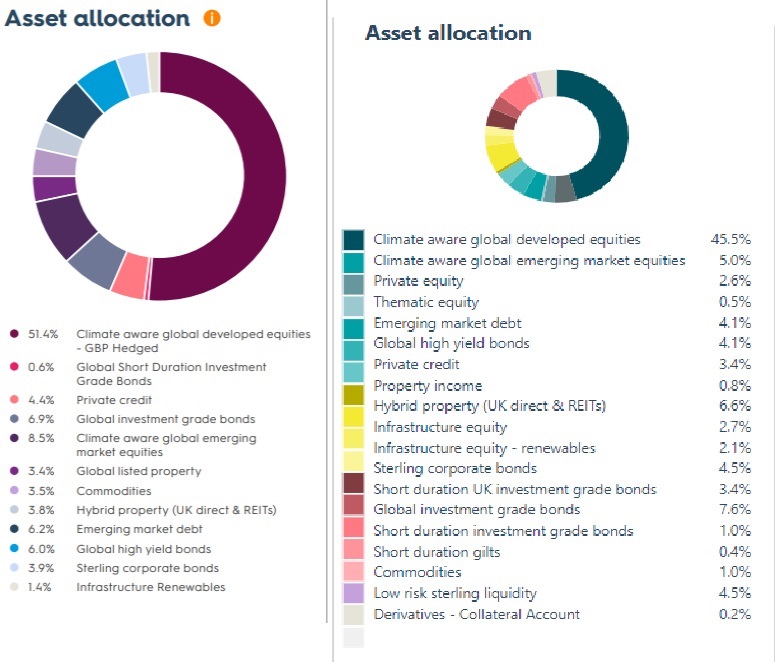
Surprisingly, Nest has not yet included timber in its Ethical Fund, a matter which is still under consideration, Menelon says. Timber is also not yet included in Nest’s decumulation stage funds, which for the time being remain solely invested in liquid assets. “As we see members retiring with larger pots, we’ll consider adding illiquids, but for now, we don’t have it in the decumulation stage,” she notes.
Carbon offsets
An obvious question for any pension fund seeking exposure is its potential to act as a carbon offset. Nest, like other pension funds, remains cautious and is not currently using its timber portfolio for carbon offsets. “We’ll measure the carbon within the timber portfolio and will disclose sequestration separately, but we don’t believe the sequestration of our timber investments will add value to our portfolio. We are reviewing the carbon credit and offset market, but for the time being, it is not of interest to us,” she adds.
“The market is not currently where it would need to be to find it interesting, but we are watching it as it develops.”
One reason for Nest’s concerns about engaging with carbon credits is their potential lifecycle. “Once we’re invested in timberland, we would then be selling the credits, so we would not be able to use them in our portfolio. It would be a bit strange to sell these credits to a large tech firm, for example,” she explains.
Another factor is the wider credibility problem the carbon credit market is facing. “We’re not permanently against carbon credits or offsets; it is potentially something we’ll look at in the future,” she hints.