
Weathering the Storm: navigating investment in climate adaptation
Helena Threlfall, portfolio manager at LPPI, explores the opportunities and challenges for investors backing climate adaptation.
You don’t need to look very far these days to see how much our weather is changing. Even here in the UK, we experienced the hottest June on record this year and it wasn’t just the grass that wilted in the heat… Some may embrace the endless summer for now (cue crowded Brighton Beach photos) but The World Health Organisation estimates over 175,000 annual heat related deaths in Europe alone over the 20 years to 2019.
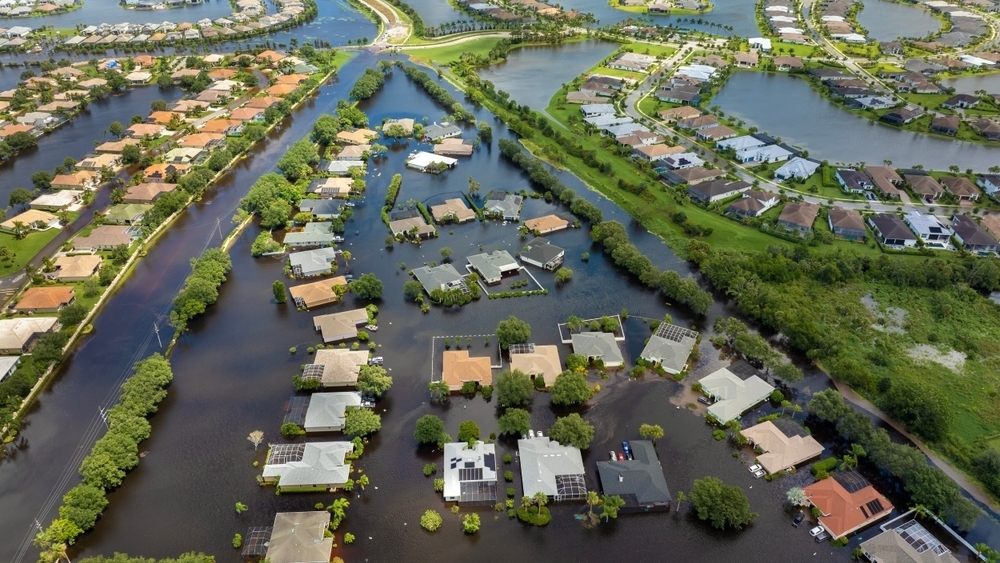
Globally, climate change is causing a huge increase in severe weather events such as wildfires, heatwaves, droughts and floods and it’s a costly business. The International Chamber of Commerce reports that 4,000 extreme weather events caused $2trn in economic losses in the decade to 2023 with the number of events rising by 83% in the 20 years to 2019 vs the prior period[1].
Clearly, we need to mitigate our emissions to prevent things getting far worse, a key focus of most climate investment, but we also need to adapt to the changes we’re already seeing and be more resilient in the face of increasingly adverse weather which brings with it some interesting investment opportunities.
In recognition, LPPI’s Environmental Opportunities Fund includes climate adaptation as one of its three environmental objectives alongside our primary goal of climate mitigation and the protection and restoration of nature which adds resilience in itself.
The World Resources Institute estimates that every $1 spent on climate adaptation can yield over $10.50 in benefits across avoided losses and economic, social and environmental benefits[2].
So where should we invest?
The adaptation theme spans a range of opportunities and investment stages which can roughly be grouped into three themes – risk analysis, risk mitigation and risk management. In fact, the United Nations Office for Disaster Risk Reduction (UNDRR) identifies over 100 different investment themes for adaptation and resilience.
Risk analysis investments focus on data gathering and processing to help predict and quantify the physical and supply chain risk to assets and businesses supporting more efficient planning. For example, through more accurate forecasting, companies can avoid investing in new buildings and infrastructure which could be in flood or wildfire prone areas and farmers can better manage their crops. BCG estimates that climate change analytics companies are growing revenues at over 25% YoY with strong EBITDA margins[3].
Adaptation-focused risk mitigation may overlap with general climate mitigation investment. Specific weather focused themes include wildfire prevention such as robotic vegetation management or tauter power cables. Flood prevention measures may include both man-made and more natural solutions such as permeable pavements and urban wetlands.
Risk management investments are those more traditional “adaptation” themes. These are wide ranging, from insurance innovations to ensure people and companies can remain protected from extreme financial losses to investments around agriculture including drought resistant seeds or controlled environment farming.
Investments in climate resilient building materials such as self-healing concrete and heating and cooling investments will also be necessary to cope with more extreme temperatures. According to the department for Business Energy and Industrial Strategy, less than 5% of UK homes have air conditioning[4]. For anyone who has slept in a loft room recently, you’ll know how uncomfortable that can be even here.
In Seville, the “Frying pan of Europe”, they are already experimenting with underground canals called “qanats” to cool the ambient air temperature by up to seven degrees Celsius and are hanging awnings to provide shade along shopping streets.
However, investment activity in climate adaptation so far has been limited… According to the Climate Policy Initiative (CPI), less than 5% of the $1.5trn total public and private spending on climate finance in 2022 was focused on specific adaptation measures[5].
So why is investing here so hard?
There are several notable challenges to unlocking adaptation focused investment. Corporate and public budgets are often used reactively to pay for damage rather than reduce the risk in the first place, especially when the benefits of prevention are hard to quantify in terms of avoided costs.
In addition, the value created by your investment may be realised over a very long time horizon and may not be recognised by the buyer at sale. And if your product is sold to governments or utility customers then it may involve long and complex procurement cycles. Many adaptation investments may also focus on emerging markets which are outside the remit of some investors.
However, there is increasing interest in investing in this area, not least as a result of the changing macro environment. Reduced political support for climate mitigation measures is bringing the adaptation theme to the fore along with the human cost of the natural disasters that hit our screens almost daily.
Thankfully, more resources are also being made available to companies and investors to help assess their climate risks such as the IIGCC’s recently updated Physical Climate Risk Appraisal Methodology.
As a result, we are starting to see adaptation as an investment theme percolating across the various asset classes we cover within LPPI’s dedicated Environmental Opportunities Fund –from venture capital innovations in wildfire detection to asset backed Infrastructure investments around water management or distributed power infrastructure aiding grid resilience and even some dedicated adaptation focused funds.
In terms of which spots to focus on, BCG and Temasek recently undertook a study of the most attractive areas within the adaptation space based on current investment activity, future “need” for a solution, ease of downstream financing and private and public sector demand[6]. They highlighted the following areas for investment within private equity, showcasing the diverse opportunities available:
- Climate adapted agricultural inputs
- Human engineered flood defence
- Climate resilient building materials
- Cooling
- Emergency medical products and services
- Climate intelligence
- Urban and industrial water efficiency
- Distributed energy solutions
The good news is that the global spending on climate adaptation more than doubled in the five years to 2022, reaching $76bn. Yes this needs to scale significantly, with CPI forecasting up to 3x as much annual spend required by 2030[7], but the trend is going in the right direction with clear economic and societal benefits.
As analytical and predictive capabilities develop further and companies wake up to the risks to their businesses and the benefits of prevention rather than cure, the long-term tailwinds make climate adaptation an investment opportunity worth thinking about.
[1] The Economic Cost of Extreme Weather Events – Oxera, 7 November 2024
[2] WRI: Strengthening the Investment Case for Climate Adaptation: A Triple Dividend Approach
[3] The Private Equity Opportunity in Climate Adaptation and Resilience, BCG, Temasek, Ecosperity, May 2025
[4] Cooling in the UK – BEIS Research Paper – 2021/050
[5] Global Landscape of Climate Finance 2024 – CPI - October 2024
[6] The Private Equity Opportunity in Climate Adaptation and Resilience, BCG, Temasek, Ecosperity, May 2025
[7] Global Landscape of Climate Finance 2024 – CPI, October 2024
For Professional Clients in the UK only
This document has been prepared to inform the intended recipient of information regarding Local Pensions Partnership Investments Ltd (LPPI) only, subject to the following disclaimer:
LPPI is authorised and regulated by the Financial Conduct Authority.
This document does not provide advice on legal, taxation or investment matters and should not be relied upon for any such purpose including (but not limited to) investment decisions.
No person or entity may rely on or make decisions based on the content of this document whether they receive it with or without consent and this disclaimer is repeated fully in respect of any third party recipient.
This information may contain ‘forward-looking statements’ with respect to certain plans and current goals and expectations relating to LPPI’s future financial condition, performance results, strategic initiatives and objectives. By their nature, all forward-looking statements are inherently predictive and speculative and involve known and unknown risk and uncertainty because they relate to future events and circumstances which are beyond LPPI’s control. Any projections or opinions expressed are current only as of the date of the document.
This document and its content is provided ‘as is’ without any representation or warranty (express or implied) and no member of LPPI or its directors, officers and employees shall be held liable howsoever to any person or entity as to the appropriateness, accuracy or completeness of the information provided.
This document is proprietary and confidential and should not be shared with anyone other than the intended recipient(s) without the prior written consent of LPPI.
Copyright: Local Pensions Partnership Investments Ltd 2025