
Charities weigh ESG goals for real-world impact
Scrutiny of ESG is prompting charities, endowments and foundations to look more closely at what their climate strategies actually achieve – and where their capital can make the greatest difference.
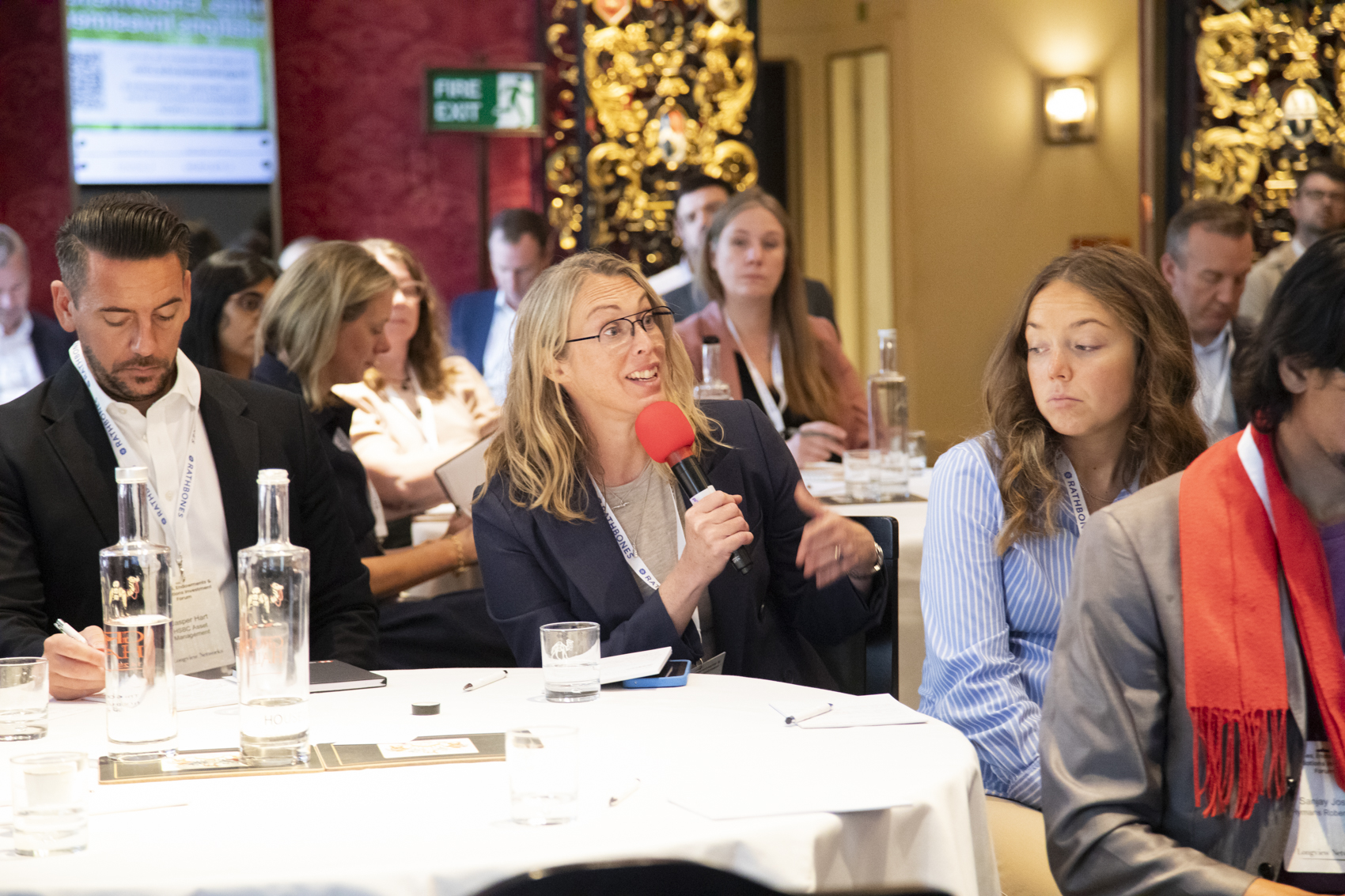
The investment environment for organisations pursuing climate objectives has become markedly less straightforward, delegates heard at Longview Networks’ Charities, Endowments and Foundations Investment Forum. The political pushback against ESG has coincided with closer examination of sustainable strategies, challenging some of the assumptions that accompanied the sector’s rapid growth.
Net Zero Investor’s Transition and Climate Investment Forum | 22 October 2026 | London
Charlie Crossley, investment engagement manager at Friends Provident Foundation, contrasted the current environment with 2020, when the foundation ran the first iteration of its Endowments Investing Challenge.
“At the crest of the ESG investing boom and wave, the win-win-win I think felt quite real,” he said. Five years later, the relationship between impact, risk and return had become harder to navigate. “There isn’t that perfect solution out there. You can balance them, but we don’t feel like you can maximise everything all at once.”
For asset owners committed to addressing climate change, this environment is encouraging a more fundamental question: what effect do their investment decisions have in the real world?

Leonora Rae, endowments and foundations impact executive at EdenTree, said its research found charities and foundations wanted greater clarity about what sustainable and impact investment could realistically achieve.
She cited one endowment that was interviewed for the research, which summed up the investment case: “This isn’t about doing good for good’s sake. There are businesses solving systemic challenges such as climate change, and these are the businesses we believe will succeed.”
Sanjay Joshi, impact and local investing specialist at Hymans Robertson, drew a distinction between ethical investment decisions and those intended to produce real-world impact. For example, an ethical investor may decide it does not want to profit from a fossil-fuel company and sell its shares. Asked how effective exclusions were at generating real-world change, his answer was: “Not very.”
Jenny Segal, trust chief investment officer at Nesta, went further. An investor that sells a company may simply transfer the holding to an owner with less interest in improving its behaviour. She argued that an engaged investor selling to a hedge fund that does not engage could conceivably have a negative effect.
Active ownership
Segal argued that public-market investors can have an impact through stewardship, but that action needs sufficient scale.
Nesta has put this principle into practice in its own manager selection. Segal described terminating an index-management mandate after the manager withdrew from climate initiatives. With around £120m invested with the US asset manager, she acknowledged that Nesta’s withdrawal alone was unlikely to have much financial significance.
Instead, the trust sought to amplify the decision through investor networks and publicity. Segal said the action generated around 16 pieces of significant press coverage, including in The Financial Times.
Her wider argument was that investors concerned about climate change could increase their influence by concentrating assets with managers willing to pursue their objectives. Collective allocations could then give those managers greater stewardship power over underlying companies.
Jaspal Sian, investment manager at the Joseph Rowntree Foundation, similarly described engagement, activism and divestment as stages on an escalating spectrum rather than mutually exclusive approaches. Engagement is the starting point; activism introduces consequences and can move discussions into the public domain; divestment remains an ultimate sanction.
However, he noted, divestment is a one-off lever. Once an investor has sold, its ability to influence the company largely disappears.
Sian also highlighted an important disadvantage for private markets; withdrawing can be much harder and potentially require selling an investment in the secondary market at a significant discount.
Financing change
While stewardship addresses how investors use their influence over existing assets, an alternative route is to direct capital towards businesses and infrastructure actively contributing to the transition.
Kate Elliot, head of the responsible investment centre of excellence at Rathbones, argued that thematic investing should begin with the change an investor is seeking rather than a predetermined sector or asset.
For climate investors, that creates a considerably broader opportunity set than renewable generation alone.
“It’s not all about building more wind turbines and renewable energy capacity,” she said. Investors can consider businesses involved in grid optimisation, energy efficiency and climate adaptation alongside renewable infrastructure.
Investors can also look for areas where their capital can contribute more directly. Sian argued that some parts of a portfolio offer relatively little opportunity to generate impact; for investors sceptical about their ability to achieve sufficient additionality through public markets, private markets become an obvious area to examine.
Segal offered one such example from Nesta’s portfolio. The trust invests substantially in private debt, where managers can build sustainability objectives directly into financing terms. Interest-rate ratchets can reduce borrowing costs when portfolio companies meet agreed ESG targets, creating a financial incentive for changes in corporate behaviour.
But private markets are not automatically the answer. For example, Segal said private equity does not currently work for Nesta. She says the trust lacks the governance capacity for direct allocations and a fund-of-funds approach would introduce additional fees, opacity and valuation difficulties.
Beyond the label
To further complicate decision making, investing in an asset associated with the energy transition does not necessarily make it a purely ethical allocation.
Elliot illustrated the problem with a hypothetical renewable infrastructure company. While its core activities contribute strongly to clean energy and grid optimisation, the same business could have a poor employee-safety record or pursue projects that create human-rights, land-rights or community concerns.
The objective, she argued, is not to find a company with no negative effects, but to understand the balance and significance of its positive and negative impacts.
The discussions point towards a more demanding phase for climate investment. The scrutiny around ESG has made simple narratives harder to sustain and sharpened the focus on changing outcomes.
For charities, endowments and foundations seeking impact from their investments, the question is increasingly how to optimise what their capital and influence can achieve in the real economy.