From traditional to sustainable agriculture: how one UK pension fund is transforming its natural assets
Vertical farming, renewable energy generation, soil and peat restoration, and nature recovery projects are among the many sustainability options on the table
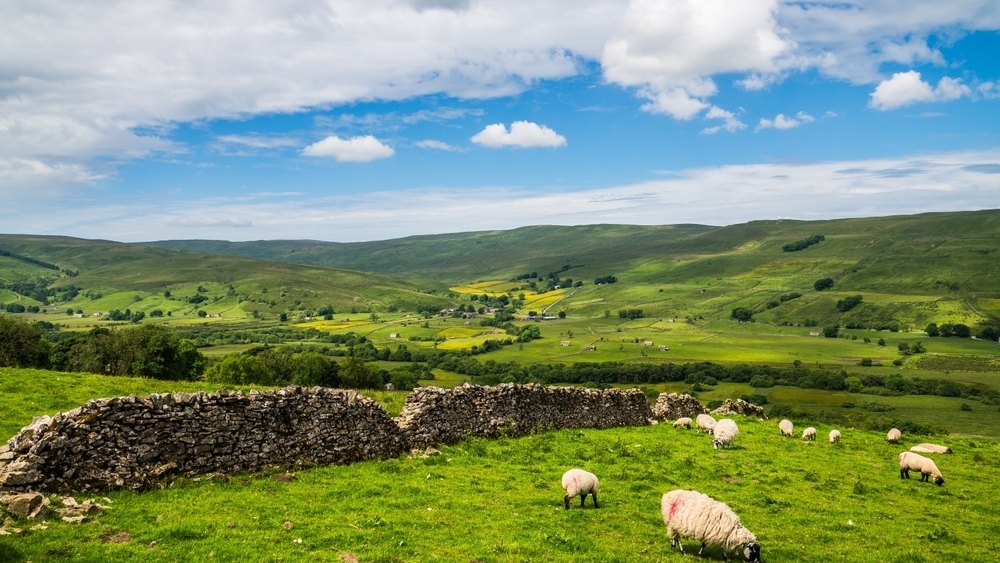
Built up over 49 years, the South Yorkshire Pension Authority’s (SYPA) 22,500-acre farmland holdings once represented a unique asset that didn’t seem to fit easily in the typical portfolio of a local government pension scheme (LGPS). A source of stable, inflation-proof rental income, for many years the massive holding simply sat passively in the background, until the investment team felt the need to take a more active role in its management.
The problem was that SYPA lacked the technical knowhow and the necessary in-house resources to explore sustainable farming practices along with other reforms that could unlock the asset’s potential. “The easiest thing to do would have been to split the holding up into chunks and sell it off and in that way reduce our exposure,” said George Graham, investment director of the SYPA. “But that didn’t feel right, especially given the long association between the land and SYPA. We felt the asset had significant potential and we wanted to realise that potential.”
Partnering with Royal London Asset Management (RLAM) marked a turning point for these ambitions. Last year, SYPA entered into a joint venture with RLAM to form the creation of the RLAM natural capital fund. Under the new structure, SYPA retained a 46% stake in the land, with the rest owned by the Royal London Insurance Society. RLAM itself is the general partner.
In the year since the transaction, the asset has not only remained intact but grown to 25,000 acres. Recognising the untapped opportunities, the new management team has undertaken a comprehensive review—drilling boreholes to assess soil health, baselining carbon emissions, and evaluating options ranging from alternative forms of farming and renewable energy projects to soil and peatland restoration for carbon offset generation.
The aim is to make this “lumpy” asset - as Graham described it - future proof and a source of long-term, sustainable returns.
The broader investment and policy landscape
Using a traditional farmland asset to explore sustainable practices is becoming something of a natural capital investment trend, according to Gresham House’s chief investment officer (forestry), David Gardner.
While forestry remains the most popular natural capital asset for pension funds, more and more natural capital funds use forestry as a “base” out of which they expand into traditional agriculture opportunities. “The idea is to integrate regenerative and sustainable agriculture practices into that portfolio,” he said. “There’s also a practical reason for this. If natural capital funds chased only pure play regenerative agriculture opportunities, they would struggle to find enough investable assets.”
Meanwhile, in the background, the UK is playing a pioneering role in stimulating innovation in land management, with landmark new laws, such as the biodiversity net gain rules, which obligate property developers to purchase strictly regulated biodiversity offsets to compensate for the impact of their developments.
In its latest agricultural budget, the UK government has promised significant funding for its Sustainable Farming Incentive (SFI) programme: £798m this year, rising to £950m the year after, and £1.5bn per year for the subsequent three years. The Agri-environment schemes have also promised £3.9bn over the next five years, which brings the total cash potentially available to farmers looking to improve their practices to at least £10.1bn. Separate funding exists for woodland management, peatland restoration, landscape recovery, and “30by30” programmes.
“Even without this policy environment, I think we would have done things the same way, as we see so much potential in the land,” said Graham. “That said, we’ll certainly look to make full use of all available public resources to aid our transition programme. We’re swimming with the tide, rather than against it, which is always helpful.”
Big Capex programmes
Government support or no, transitioning from traditional to sustainable agriculture is an expensive business that requires a careful Capex strategy.
Take vertical farming – one of the options available for the RLAM natural capital fund.
Vertical farming is the practice of growing crops in vertically and horizontally stacked layers. It often incorporates controlled-environment agriculture, which aims to optimise plant growth, and soilless farming techniques such as hydroponics, aquaponics, and aeroponics. Some common choices of structures to house vertical farming systems include buildings, shipping containers, underground tunnels, and abandoned mine shafts.
The main advantage of vertical farming technologies is the increased crop yield that comes with a smaller unit area of land requirement. Its limited land usage also means it is less disruptive to native plants and animals, aiding conservation efforts. Additionally, crops are resistant to weather disruptions because of their placement indoors, meaning less crops lost to extreme or unexpected weather occurrences.
The environmental potential of soils has been degraded over hundreds of years. If we manage to reinstate that over ten years, we’ll be doing quite well.

The world’s largest vertical farm recently opened in Gloucestershire. It’s an indoor farm where produce grows in stacks of trays up to 15 high. It’s kept at a consistent 27 degrees with 75% humidity and has 14,500 square metres of growing space. It also claims to grow salad leaves three times faster than a regular farm can.
While this sounds promising, vertical farming also requires large, upfront costs and a high level of skill and technological know-how.
“We’re here for the long game,” explained Graham. “The Capex plans will be phased in over a period of 10 years.”
The timeline doesn’t faze him. “The environmental potential of soils has been degraded over hundreds of years. If we manage to reinstate that over ten years, we’ll be doing quite well,” he added.
In addition to vertical farming, the natural capital fund managers are also looking at soil and peat regeneration.
Food security and sustainability balance
While the RLAM has yet to finalise its sustainability-linked Capex programme, one thing Graham is clear on is that the transition to sustainable methods shouldn’t come at the cost of reduced food output.
“Our aim is to balance a commitment to environmental sustainability with a commitment to food security,” Graham said. “There’s a potential to grow the income per acre quite significantly. Even if we end up using less land for food production, and more land for other sustainability activities, the volume of food production will remain the same.”
The 25,000 acre farmland portfolio is spread across Lincolnshire, Wiltshire, and the Cambridge-Norfolk border.
“As stewards, we have the responsibility to ensure the land achieves its full potential,” Graham added. “For the time being, we are closed to other investors as we focus on designing and implementing our plans. This may change later on, but first we need to prove the concept.”
Growing returns: West Yorkshire's Darran Ward on cultivating natural capital