
Dutch pension industry lobbies coalition talks on climate
Coalition talks in the Netherlands could pose headwinds for the country´s energy transition. Leading representatives of the Dutch pension industry are now urging to make climate a priority
Following the Dutch general election in November 2023, representatives for the Dutch pension industry are now lobbying Dutch policy makers tasked with establishing the new government to make climate a priority, with Dutch pension funds offering to ramp up their investments in climate solutions.
The Netherlands held a general election in 2023 but with 17 parties competing for the vote, the country remains politically fragmented and has so far been unable to form a coalition.
The far right PVV came out strongest but as other parties refused to enter into a coalition with its leader Geert Wilders as a prime minister. A coalition of a the Farmer Citizen Movement (BBB), the conservative-liberal VVD, the newly launched conservative New Social Contract party and the far-right PVV now appears to be the most likely outcome.
Political headwinds
While Wilders has accepted that he will not lead the country as its next premier, he is expected to play a significant role in shaping the political discourse in the Netherlands.
The far-right party leader, who rose to prominence over his anti-Islam stance has also been outspoken in denying that climate change will have a material impact. PVV's election programme describes government incentives for the renewables industry as "lefty-liberal" and "nonsense" imposed by unelected EU bureaucrats.
In contrast, the conservative-liberal VVD recognises climate change and is embracing a net zero target. It is keen to attract more investment in the energy transition and the new Social Contract party pursues a similar agenda.
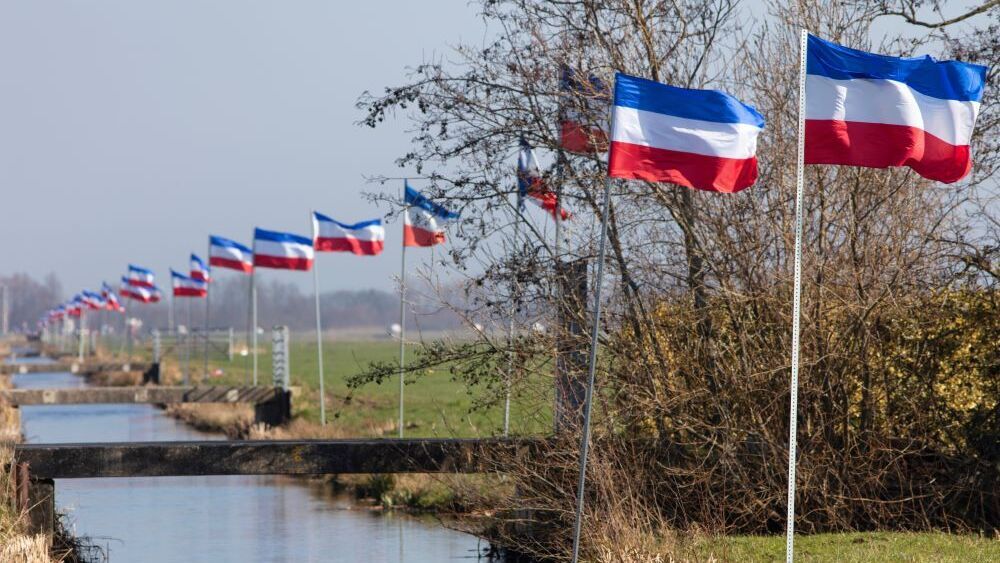
Meanwhile, the farmer's party BBB was formed on the back of nationwide farmers protests against more stringent nitrogen emissions. Dutch flags being turned upside down have become a nationwide symbol of farmers opposing more stringent environmental legislation and still being displayed alongside major roads up and down the country.
On climate, the BBB's stance is more ambivalent. The party acknowledges the impact of climate change on the country but it also states that Dutch net zero targets are too ambitious and is emphasising that the energy transition should not impose undue burdens on Dutch citizens.
Net Zero Investor's Nature Positive Investment Forum
24 April, London Stock Exchange sign up here
The new government's potentially more cautious stance on climate could pose a real challenge for Dutch pension funds, who are keen to invest more in the energy transition.
Dutch public sector pension fund ABP, which with just under €500bn in assets the largest pension fund in Europe, has announced a €10bn commitment to climate solutions at the beginning of March. ABP has also responded to a tender by the Dutch government in order to build a large-scale offshore wind park in the North sea.
Similarly, PFZW, the €237bn pension fund for the care sector recently announced its divestment from most fossil fuel holdings and is ramping up investments in the energy transition, many investments are intended to be in the Netherlands.
"A bigger impact"
With the new government likely to take a lukewarm stance on the energy transition, the Dutch Federation of Pension Funds (PensioenFederatie) and €474bn ABP have entered talks with the two powerful informateurs in order to lobby in favour of climate policies.
The informateurs, Elbert Dijkgraaf and Richard van Zwol, have been put forward by Geert Wilders and, with the approval of the Dutch parliament been tasked with helping to negotiate the formation of a coalition cabinet in the country.
This week, PensioenFederatie and ABP revealed that just before Easter they had entered talks with both informateurs. This follows the publication of a letter by five Dutch pension funds calling for the next government in the Netherlands to help accelerate investment into the energy transition.
The letter addressed to informateurs called for measures including the creation of a national investment institution, greater public-private partnerships and joint lending, where the credit risk for pension funds is reduced through a guarantee structure.
ABP, PMT, bpfBouw, PME, and PFZW, which have total assets of €900bn, said in the letter: “We want to make a bigger impact, we can and want to invest more in the Dutch energy transition.
“By working together with the government, we can achieve long-term stable returns and make an important contribution to the necessary energy transition in the Netherlands.
“We therefore ask the government to play a leading role and keep providing clear multi-year policy on the energy transition and themes including CO2 pricing, green tax measures, encouraging emissions reduction, renewable energy and innovations.”
The letter added that a fully-fledged national investment institution would “bring together supply and demand” and create “investable impactful projects”.
PensioenFederatie added that talks with the informateurs are also “in line” with a letter they sent in February, which emphasised the “importance of peace and space for the pension sector to implement the new pension law with focus”.
Dutch pension giant joins forces with cooperatives to bet on North Sea Wind