European investors are counting the cost of extreme heat
With large parts of the continent facing a period of extreme drought, investors are rethinking how to prepare their portfolios for extreme weather
Along the river Elbe in the town of Děčín in Czechia, close to the German border, a so-called “hunger stone” represents a hydrological marker that has tracked periods of drought for more than 600 years. With rainfall having been almost non-existent, it now showcases a warning written by our ancestors: “if you see me, weep.”
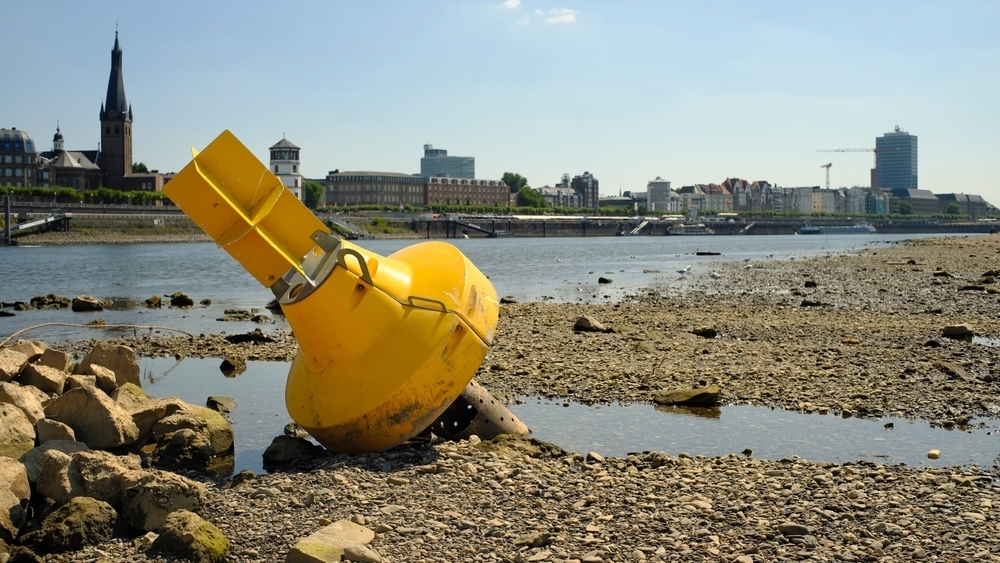
Similar low-water marks can be found alongside rivers in Central Europe, most notably along the Danube and Rhine, where critical freight transport has almost ground to a halt as the Rhine reaches historically low levels.
Meanwhile, large parts of Europe and the UK are currently on fire with Spain and Italy alone facing more than 400 wildfires this year at the time of writing.
NZI Transition and Climate Investment Conference | 22 October | London | Register here
The scale of the damage
The extreme weather has prompted investors to assess the initial damage, with early figures varying greatly. While it is still early days, reinsurance giant Swiss Re estimates in its H1 report that the June heatwave led to some 20,000 excess deaths, making it the deadliest event of the year so far, as average temperatures remained some 3 degrees above averages recorded between 1991 and 2000.
New research by Triodos Bank predicts that the hot weather could wipe out up to 1% of EU GDP, equivalent to a loss of €180bn. The pain is likely to be particularly felt by countries such as France, which could see 1.4% of its GDP wiped out, while the impact has been less extreme in countries such as Poland, the research shows.
But Triodos also points out that simplistic measures such as GDP forecasts are likely to understate the scale of the damage, as they do not factor in the loss of lives and environmental destruction. Indeed, the added expense could even increase GDP.
Attempting a more comprehensive forecast, Triodos estimates that roughly 25,000 heat deaths recorded this summer could amount to a cost of €1.5bn to €7bn, while ecosystem losses, based on the destruction of 434,976 hectares burned across the EU this year as of July, imply a further €0.1bn–€4.6bn in wildfire damage, though the bank believes the true extent of the cost could be even higher.
Model constraints
However, while it is by now clear that climate change results in financial losses, investors continue to grapple with a range of model constraints that prevent them from integrating climate risk more thoroughly into portfolio allocation decisions, according to “Investing in an Era of Extreme Weather”, a recent report by the Sustainable Markets Initiative, produced jointly by Marsh and Impax Asset Management.
Among these is a “special granularity mismatch”, whereby extreme weather occurs at a finer granularity than that captured by standard climate models. This could, for example, be the impact of wildfires on a multinational company with complex supply chains. Another challenge is tail-risk probability, with many models struggling to capture low-probability, high-impact outcomes.
Climate risk modelling also often continues to focus on long-term 2050 scenarios while lacking detail on near-term risks, the authors warn.
Even if investors manage to source comprehensive risk models, there is always the non-negligible fact that climate change is a non-diversifiable risk, impacting virtually all asset classes and occurring in conjunction with geopolitics, technological change and demographic trends, as Simon Pilcher, CEO of UK pension giant USS Investment Management, the investment wing of the Universities Superannuation Scheme, wrote in a recent piece for Net Zero Investor. “These forces interact with climate risk in ways that can materially alter investment outcomes.”
Climate-resilient portfolios
Putting this into practice, USS IM has expanded its consideration of physical and transition risks, including greater consideration of climate tipping points, such as permafrost thaw and disruption to the Atlantic Meridional Overturning Circulation, Pilcher shares in a recent article for Net Zero Investor.
Similarly, the report by Impax and Marsh sees a key role for policymakers in mandating disclosure of corporate resilience plans and the location of assets and supply-chain nodes exposed to material extreme weather risks, improving market transparency.
Politicians could also play a key role in strengthening incentives for adaptation investment by tightening building standards in high-risk areas and providing targeted financial support, the authors believe.