
Editorial: ‘net zero’ is a means to an end
Amid mounting discussions if the term “net zero” has extended its usefulness, the Net Zero Investor editorial team weighs in on the debate.
Last week, the UK’s energy select committee recommended that the Department for Energy Security and Net Zero dropped the net zero part from its name, in a bid to secure greater public support for the energy transition.
While there was widespread public support for tackling climate change, the term was overly technical, had become a distraction from the broader aims of the energy transition and lost much of its positive association, with some 75% of the UK public assuming that net zero was leaving them worse off, the authors highlighted.
NZI Transition and Climate Investment Conference | 22 October | London | Register here
In recent years, some media outlets have spent considerable time and effort arguing that investing in renewables and cutting emissions was wasteful. That message seems to have landed with the wider UK public, particularly against the context of legitimate concerns over sky-high energy prices
Raison d'être
This raises some big questions for us as a title operating under the name Net Zero Investor. Should we try to water down our message, rebrand, or lean in?
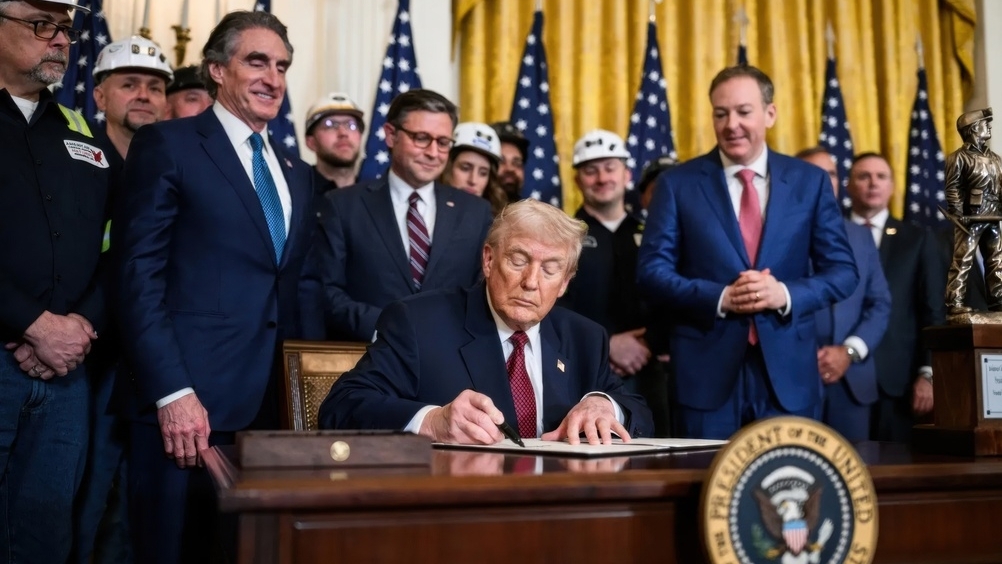
We would argue that it is important to put this shift into perspective. It would be convenient, but simplistic to simply blame it on the Trump administration’s stance towards climate change.
It would also be easier to ignore the critics. There are good reasons why one might want to question the concept of net zero.
A flurry of companies pledging net zero alignment deserves evidence-led scrutiny. As does the very pragmatic concern over affordability and energy prices that households have rallied over. When we speak to asset owners, we are often told of that while they may have reduced emissions at portfolio level, they are concerned that the real world impact is lacking.
These are questions of value and significance. What then, does this mean for a title like NZI? Our response: net zero was never the goal. It was a means to an end. An end that is scientifically grounded and financially material.
Amid mounting discussions in the national press, we have taken a step back to question our role as journalists more broadly.
Our trade has an old adage. If someone says it is raining and another person disagrees, is it the job of the journalist to simply quote them both? Not quite. The journalist’s duty to their reader is to open the window and find out who is lying.
Opening the net zero window
Our duty to our readers is to embed ourselves in facts. That means grounding ourselves and our stories in the scientific, financial materiality of climate change, emissions reduction and planetary boundaries.
This is our equivalent of opening the window.
Recall the landmark 2018 IPCC report on the impacts of global warming of 1.5°C which popularised the phrase "net zero". It's central message is best summed up in the following extract: “Future climate-related risks depend on the rate, peak and duration of warming”.
Net zero by 2050 was an emissions reduction pathway that scientists expected to be consistent with ‘no or limited overshoot’ of the infamous 1.5°C goal. Net zero, regardless of the time frame, is a means to an end.
The end being limiting the rate and duration of warming which climate-related risks are associated with.
These facts still stand. Higher warming breeds greater risk. The MWO forecasted an 80% chance of an El Niño event over the summer and a 90% chance of it continuing until November. It meant higher rainfall in South America, drier conditions in Australia, and elevated hurricane risk in the Pacific Ocean.
Warmer conditions are associated with elevated risks of extreme weather events. Extreme heat across Europe this summer is evidence worth bearing in mind.
When the UNEP confirmed a 1.5°C overshoot a few days ago, it pointed to the unfortunate demise of net zero by 2050. Claiming this to be the death of net zero itself, is a purposefully reductionist acceptance of global warming at best and a scientifically ignorant take on its effects at worst.
That higher levels of warming result in cascading climate-related risks is what you find when you examine the facts. As the notorious catchphrase goes – facts don’t care about your feelings.
Climate risks are financially material
One might ask, why should investors care? In other words, are climate risks still financially material? Let’s open the window again.
When MSCI analysed some 25,000 company disclosures between 2023 – 2025, they found 81% cited physical risks. That is unprecedented. MSCI’s analysts even came up with a category to capture companies with higher exposure and lower preparedness – HELP. 37% of the 900 MSCI ACWI index constituents are in that group.
J.P. Morgan’s climate advisory head Dr. Sarah Kapnick’s note on tipping points underscores their financial materiality. Kapnick, an atmospheric scientist by training, says tipping points are ‘under-modelled’ and ‘deeply uncertain’.
Earlier this year, the UK’s Institute and Faculty of Actuaries issued a stern warning for financial markets – existing risk modelling approaches seem to have ‘seriously underestimated’ the rate of warming. ‘Better to be roughly right than precisely wrong’, said one of the authors.
Insurance markets tell a similar tale. Europe’s Insurance and Occupational Pensions Authority and the ECB estimate that just a quarter of losses linked to extreme weather events between 1980 and 2024 were insured. Munich Re’s estimate of $112bn in global losses linked to natural disasters suggests 60% were uninsured.
The list goes on. The financial materiality of climate-related risks – most notably physical risk – is therefore multidimensional and increasingly evident.
Conclusion
We don’t claim to disregard the criticism around net zero. Much to the contrary, we want to lean in and engage. We could for instance do more with pushing those in the climate corner – investors, politicians and advocacy groups – towards stronger arguments and a weaker tolerance of broken promises.
We are not dogmatically wedded to a term, but we are grounded in the end goal of limiting global warming. If climate risks are not only exacerbated by higher levels of warming but also financially material for intergenerational investors, then a title like ours has a duty to our readers we pride ourselves on defending.