


Passing the climate baton: how Asia picks up the pace on net zero
New data from SBTi and IRENA show rising net zero targets and renewable energy adoption
Last year, Taiwan Semiconductor Manufacturing Company – the world’s largest chipmaker – marked Earth Day by committing to the Science Based Targets Initiative (SBTi). Nearly a year to the date, TSMC’s SBTi-validated net zero targets point to a wider trend – Asia’s adoption of net zero targets accelerated by 53% last year.
Despite policy headwinds from the US, new data from the SBTi suggests Asia’s climate target setting is not only deepening but also expanding at an unprecedented pace.
NZI Transition Climate and Investment Forum |22 October 2026 | London | register here
Centre of gravity
The SBTi’s Trend Tracker offers a bird’s eye view of corporate climate commitments. Its latest edition, published last week, puts the spotlight on Asia.
“Asia is emerging as a centre of gravity for corporate climate target-setting”, the organisation said in a statement. 1216 new Asian corporates adopted validated targets last year, compared to Europe’s 1209.
Japan, a key driver of the trend, is home to the highest total number of companies with validated targets (over 2000). The comparative figure for the US stood at 943.
Growth in SBTi adoption goes beyond the big three – China, India and Japan. Indonesia, Pakistan, Singapore and Thailand all reported strong uptake figures.
“There is clear evidence about the business benefits of science-based target-setting—this is a key lever for companies to manage transition risk and strengthen business resilience, remaining competitive now and in the future”, commented SBTi chief executive David Kennedy.
Kennedy reckons momentum in net zero climate target setting also extends beyond Asia. “The data in this report shows that despite political headwinds, increasing numbers of companies in every region are setting science-based targets”, he adds.
Renewable energy
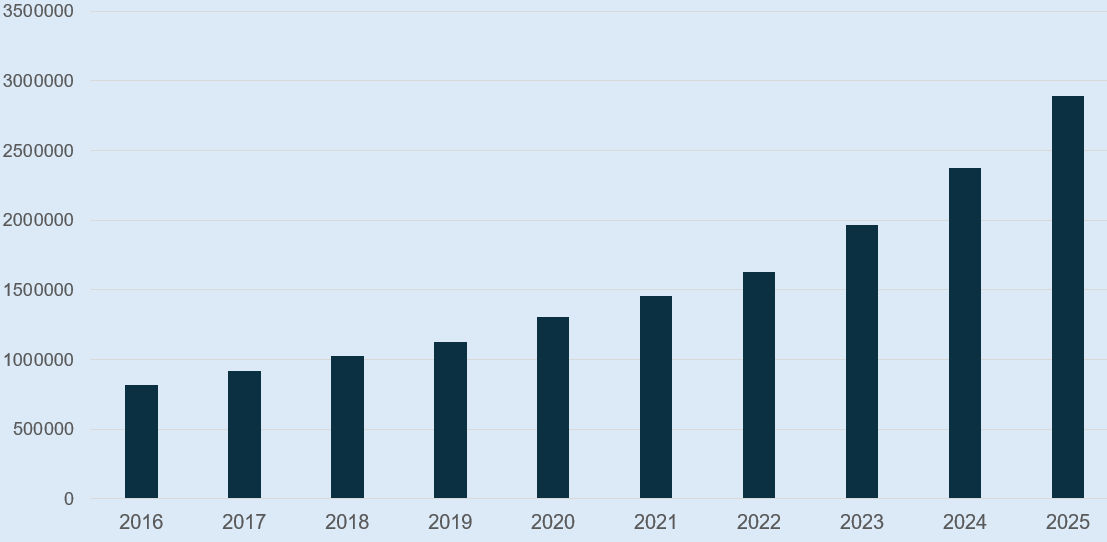
That the region’s ambition is being followed by action is evidenced through its energy transition. Asia is currently home to 56% of the world’s renewable power capacity. That is according to new estimates from the International Renewable Energy Agency (IRENA).
The region currently hosts 2891 GW of renewable energy, over 500GW of which came through last year. 74% of new global capacity additions last year came from the region. At a growth rate of 21.6%, adoption rates exceed those in Europe and North America.
The region’s ongoing energy security crisis, courtesy of the war in Iran, is likely to accelerate growth in both electrification and renewable energy uptake. IRENA’s new policy advisory, published today, recommends it.
“In the midst of uncertain time, renewable energy remains consistent and steadfast in its expansion. This not only indicates market preference but also makes a strong case for renewable energy resilience with brutal clarity”, affirms IRENA director general Francesco La Camera.
“Countries that invested in the energy transition are weathering this crisis with less economic damage, as they boost energy security, resilience and competitiveness”, he adds.
IRENA’s recommends viewing electrification and renewable energy adoption as an emergency response. There are signs of its advice finding an audience in Asia.
South Korea is a case in point. On April 6, in response to the war in Iran, the county’s energy minister Kim Sunghwan raised the fossil fuel dependence alarm. In a report submitted to the State Council, Sunghwan’s ministry recommended accelerating Korea’s energy transition. This, the minister said, would “ensure that our country remains resilient against external shocks such as the Middle East conflict”.
Asian policymakers are rushing to respond to energy security crises unleashed by the on-going war, and the energy transition is emerging as a priority, even beyond the short-term. Against the backdrop of rising net zero target setting, both ambition and progress across Asia are pointing in the same direction.
Longview Networks: Institutional Investment Conferences and Summits