
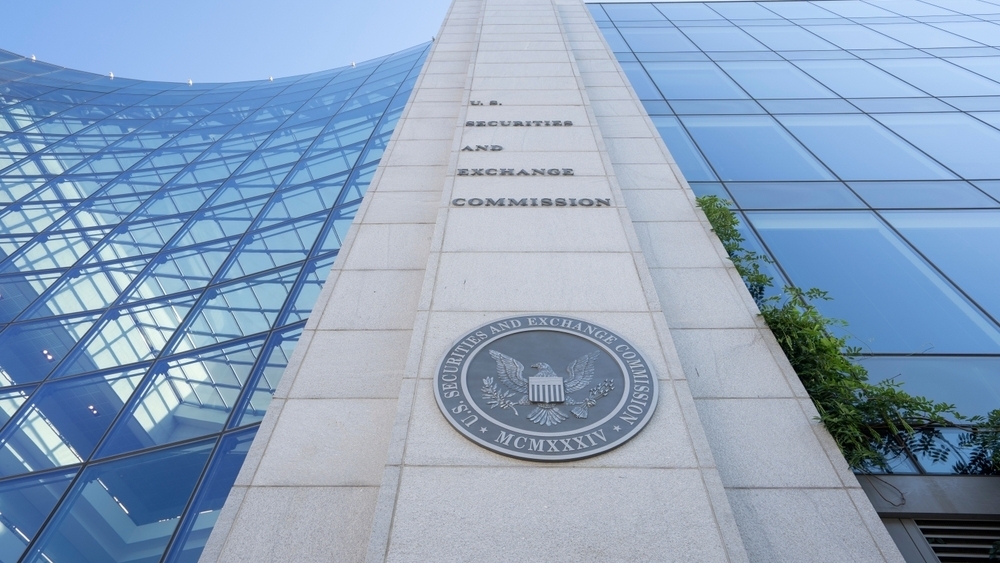
SEC to cede control over shareholder resolutions to US states
The US financial markets watchdog is taking further steps to withdraw federal backing for investors to file resolutions at corporate AGMs, a move with significant implications for US shareholder democracy
The SEC, which has historically been the final arbiter in shareholder disputes, is stepping back from its role as a mediator, leaving states with the final say on shareholder resolutions.
The regulator issued a regulatory notice on Friday setting out plans to change Rule 14a-8, which governs shareholder resolutions at publicly listed companies.
Under current rules, shareholders have a federal right to put resolutions into a company’s proxy statement; the firm in question is required to circulate these proposals to all shareholders.
NZI Transition and Climate Investment Conference | 22 October | London | Register here
In the past, firms wanting to exclude shareholder proposals would have to make the case to the SEC that there were legitimate grounds for doing so in a so-called “no-action request.” If the SEC’s planned changes come to pass, shareholders would now have to turn to the states where the listed company is based to appeal a decision to exclude a resolution.
Commenting on the news, an SEC spokesperson said: "Since his time as a commissioner, chairman Atkins has highlighted concerns that the SEC's Rule 14a-8 on shareholder proposals exceeds the Commission’s authority and infringes upon State laws. To that end, the Commission is expected to consider a proposal to rescind the rule and return the role of regulating shareholder proposals to the States. In addition, the Commission is also expected to consider a proposal to modernize aspects of the proxy solicitation process to reflect advancement in technology and current realities of shareholder communications."
A key motivation for these changes is a move to ease reporting burdens for US-listed firms, SEC chair Paul Atkins said during a recent speech at the Society for Corporate Governance Conference in Tennessee.
“Presented with a 40 percent decline in public companies over the past few decades, we are summoned not to create more complexity nor reinvent our mandate, but to restore it to its foundation: that is, disclosure of material information,” he argued.
Criticism
The changes have drawn criticism from major asset owners and shareholder rights campaigners. New York State Comptroller Thomas DiNapoli has backed a petition calling for the retention of Rule 14a-8.
Andrew Behar, CEO of As You Sow, warned that the changes risk undermining the fundamental infrastructure protecting shareholder rights in the US. “Rule 14a-8 is not a fringe mechanism. It is the basic plumbing that allows owners of public companies to hold management accountable. Rescinding it after more than eight decades increases risks to all shareholders by removing a critical oversight mechanism, putting all U.S. investors at greater risk.”
Bryan McGannon, managing director at USSIF said that the SEC's proposed recission of Rule 14a-8 would jeopardise the structured, time-tested process that guide how shareholders and the companies they own engage on issues that impact a company’s long-term value.
"Extricating the SEC completely from the process will bring more complexity and less consistency as shareholders will have to navigate varying state laws instead of one federal standard.
The Rule 14a-8 process isn’t broken and does not need a radical overhaul. US SIF will work with our members and allies to inform policymakers that the structured shareholder proposal process is good for capital markets" he added.
Lindsey Stewart, director of Institutional Insight at Morningstar, warned that the latest moves risk creating further ambiguity on shareholder representation. “Many shareholders have found the existing role of the SEC useful as a central, federal-level arbiter of what is and is not permissible in the shareholder resolution process. The proposal to delegate this power to the states leaves room for greater fragmentation and less certainty over the process, but it’s consistent with the SEC’s direction of travel on this issue, with the regulator having withdrawn from opining on the validity of shareholder proposals within the last year. States that have implemented corporate laws that are less accommodating of shareholder activism are likely to see the latest development as a win – Texas being the most prominent example,” he warned.
Last year, Texan lawmakers discussed a requirement to hold at least $1m or 3% of a company's shares to file a resolution. While the planned changes were not introduced in full, Texas has introduced a 3% ownership threshold for derivative actions and has strengthened protections for directors and companies against litigation.
SEC’s retreat from shareholder arbitration
The SEC’s latest move follows a series of measures taken by the regulator to step back from shareholder dispute resolution.
In late 2025, the SEC announced that it would stop issuing substantive responses to no-action requests for the 2025–26 proxy season, effectively withdrawing from its role as federal arbiter of investor disputes. While more than 200 no-action requests had been filed in 2024, the SEC stated in November 2025 that it would no longer provide detailed reviews of individual cases, citing resource constraints.
Atkins said that the decision to no longer respond substantively to shareholder requests has not had a significant impact on the number of shareholder resolutions filed, but had instead helped the SEC save time and resources.
“It’s hard to understand the SEC’s rationale for proposing to shield companies from advisory shareholder input,” said Danielle Fugere, president and chief counsel at As You Sow. “The costs to companies of putting a quarter page statement on their proxy is miniscule compared to the cost to shareholders and the market of shielding issuers and their boards from investor concern about unaddressed risk.”
Last year, the SEC also changed regulations 13D and 13G, in a move that rendered many investors ineligible to report beneficial ownership using the simplified “short-form” Schedule 13G forms.
In 2025, the number of shareholder resolutions filed at US-listed firms dropped from 932 in 2024 to 781.