
Tailwinds: Are UK investors finding opportunities onshore?
Only days after entering Downing Street, the new Labour government has lifted what it called a de-facto ban on onshore wind, could this provide tailwinds for investments in Britain’s onshore wind industry?
For the past ten years, take up for UK onshore wind had been lacklustre. While other European markets such as Germany, France and Spain had made onshore wind a cornerstone of their energy transition, British development of land-based wind energy stalled. Last year, the government received no new planning applications for onshore windfarms in England, despite an initial easing of planning applications introduced by then communities secretary Michael Gove and energy secretary Claire Cutinho.
The newly elected Labour government is keen to reverse the outlook for onshore wind. Having been appointed Secretary of State for Energy Security and Net Zero on Friday, Ed Milliband used Monday, his first day in the office to announce a significant easing of planning restrictions on onshore wind.
The investment case
Nearly 80% of all new wind energy capacity generated in Europe last year was in onshore wind, according to data by WindEurope. There are clear advantages to onshore compared to offshore wind. For starters, it is one of the cheapest forms of renewable energy and comparatively easier to install.
There is also evidence that while UK capacity for offshore wind and solar has significantly increased last year, onshore wind has actually generated more energy, according to data provided by the UK's Department on Energy and Net Zero.
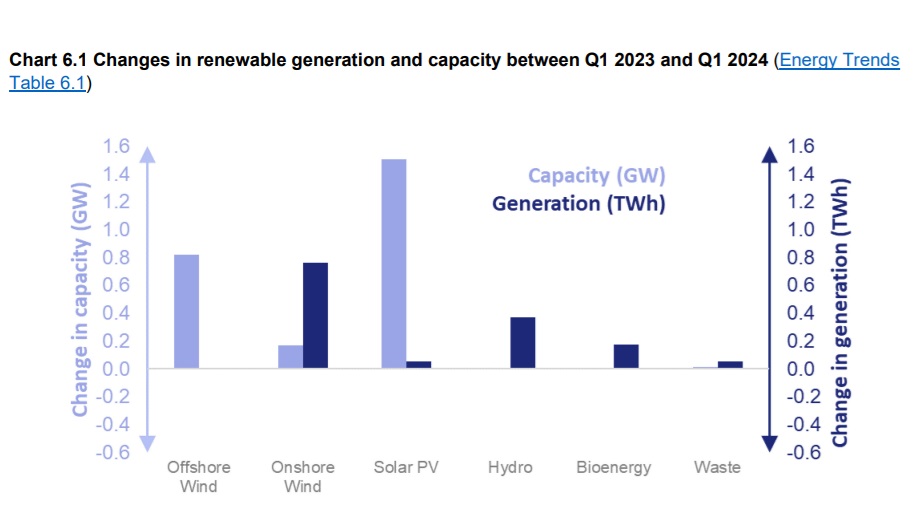
Under the exiting planning restrictions, new developments for onshore wind were subject to more stringent rules than any other form of development, the government said. Planning restrictions put in place in 2015 limited new onshore wind developments to areas allocated in a development plan or through local development orders which made it very difficult to gain approvals for these projects.
Maf Smith, and adviser and then deputy CEO at RenewableUK, the UK’s renewable energy trade body recalls that the planning introductions, intrdroduced by the David Cameron government with the claim that “people were fed up with onshore wind” had been a real hit for the industry. “Llots of energy companies having to make whole teams redundant. In RenewableUK it led to us having to cut our organisation’s staff team in half over a painful six months” Smith recalled in a post on LinkedIn.
Consequently, UK institutional investors have been relatively more cautious to embrace onshore wind and focused instead on offshore developments. A prominent example includes GLIL and Nests’ collaboration with Octopus Energy in taking a significant stake in the offshore wind development Hornsea.
But Nuwan Goonetilleke, head of Capital Markets at Phoenix Group expressed optimism that this could soon change, stating that the group approved of Laobur's changes to onshore wind planning rules. “It remains one of the most cost-effective ways to generate renewable electricity, although new developments will be contingent on sufficient grid capacity being available in the right locations and securing grid connections. If this can be resolved and effective funding models can be established, there is potentially an opportunity to scale up generation in a way that is both sympathetic and meaningful to local communities. We are excited by the potential to invest in onshore wind projects that can both support the transition to net zero and deliver good customer outcomes” he said.
There have been some examples of onshore investments outside of England, such as GLIL’s stake in Rathcool, an onshore project in Ireland. The Transport for London Pension Fund has also acquired the Wadlow wind farm near Cambridge earlier this year.
But overall, the restrictions have caused a real hit to the UK’s onshore wind energy capacity. In the years between 2017 and 2021, the UK has lost out on an additional 5.4GW in onshore wind energy capacity, according to an analysis by Carbon Brief.
Winds of change?
But there are early indications that the easing of planning restrictions and a generally more supportive policy environment for renewables could turn this around. A survey among insurers and pension funds released by Alpha Real last week shows strong demand for allocations to renewables with onshore wind being one of the most popular assets to invest in.
A clear majority of 85% of investors surveyed said they intend to increase their investments in multiple renewable energy technologies with nine out of ten investors stating that they considered investing in onshore wind within the next five years.
In a further bid to bolster investments in the UK’s energy transition, the new government has also confirmed the launch of a new National Wealth fund and a review of the British Business Bank as potential provider of a private market pipeline for institutional investors. Further details of Labour’s policy agenda are expected to released during the King’s Speech next week.